
Topic-based chat for focused teams
Speakeasy is team chat organised around focused topics instead of broad channels, so each decision, file, call, and follow-up stays with the work it belongs to.
Start a focused topic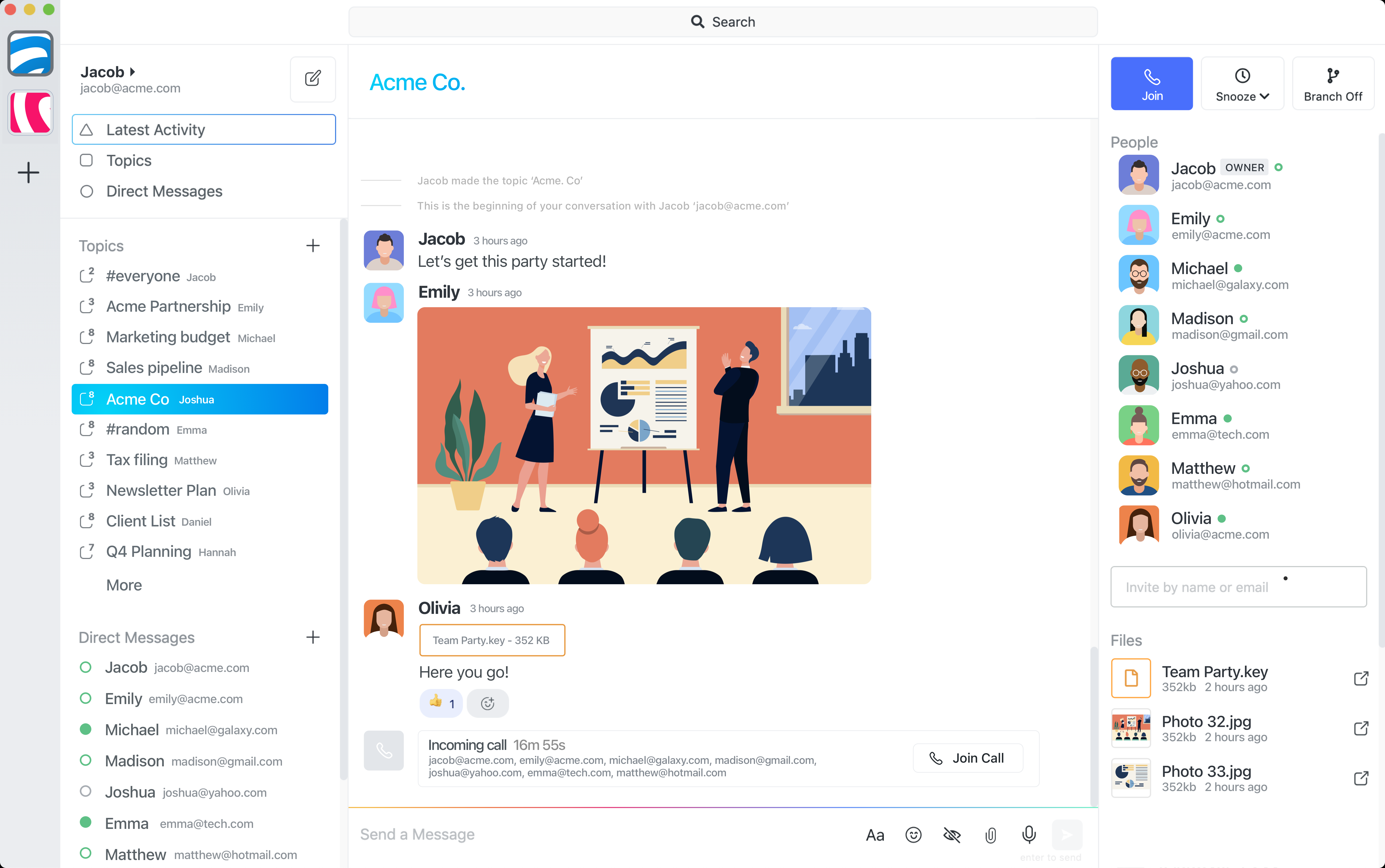
What is topic-based chat?
Topic-based chat starts from the work itself: a decision, client question, task, incident, handoff, or approval. Instead of dropping every update into a broad room, Speakeasy gives that topic its own focused space with the people, files, calls, and history attached.
Why channels create broadcast noise
Channel-first tools are useful for broad visibility, but they push teams toward rooms that are always on and increasingly crowded. Focused work has to compete with announcements, side notes, reactions, and unrelated updates, so people either watch too much or miss the context they needed.
Why threads become hard to manage
Threads help with quick replies, but important work gets awkward when the thread becomes the real room. Decisions, files, approvals, and follow-ups can end up buried under an old channel message, making the conversation hard to scan, share, or close.
How Speakeasy topics work
In Speakeasy, the topic is the primary object. Start a topic for a specific piece of work, invite only the people who need that context, use chat or calls as the conversation evolves, and return later to the same place for the record, files, and decisions.
Examples of good topics
Good topics are concrete enough that the right audience is obvious: April product launch, Acme renewal, candidate interview loop, incident review, design handoff, contract approval, onboarding plan, or an agent workflow that needs human review.
When to use channels instead
Channels still fit broad announcements, open community spaces, high-volume support rooms, or ongoing department chatter where discovery matters more than completion. Speakeasy is strongest when a conversation has a clear purpose, a smaller audience, and a record people need to find again.
How topic-based chat works with AI agents
AI agents are easier to supervise when their updates live inside the same focused topic as the human discussion. Speakeasy can keep instructions, progress, approval checkpoints, files, and final decisions together instead of spreading automation noise through broad channels.
Common questions
What is topic-based chat?
Topic-based chat organises discussion around a specific subject or task instead of putting every message in a broad channel.
Is topic-based chat the same as threads?
No. Threads are usually attached to a message inside a channel. Speakeasy topics are first-class conversations that can be named, invited into, searched, revisited, and closed around the work itself.
Can Speakeasy replace every channel?
Not always. Broad announcements, public communities, and open support rooms can still work better as channels. Speakeasy is designed for focused work where the right people, context, and follow-up should stay together.
Can topics include files and calls?
Yes. Speakeasy topics are designed to hold messages, files, calls, decisions, and related collaboration context together.
How does topic-based chat help AI agents?
A focused topic gives an AI agent a clear place for instructions, progress updates, review questions, approvals, and final output, so people can supervise the workflow without creating channel-wide noise.