
Speakeasy vs Discord: Work chat without the community noise
Discord is strong for communities, voice-first groups, and always-on spaces. Speakeasy is built for teams that want calmer work chat around focused topics, decisions, files, quick calls, and follow-up.
Start your team chat now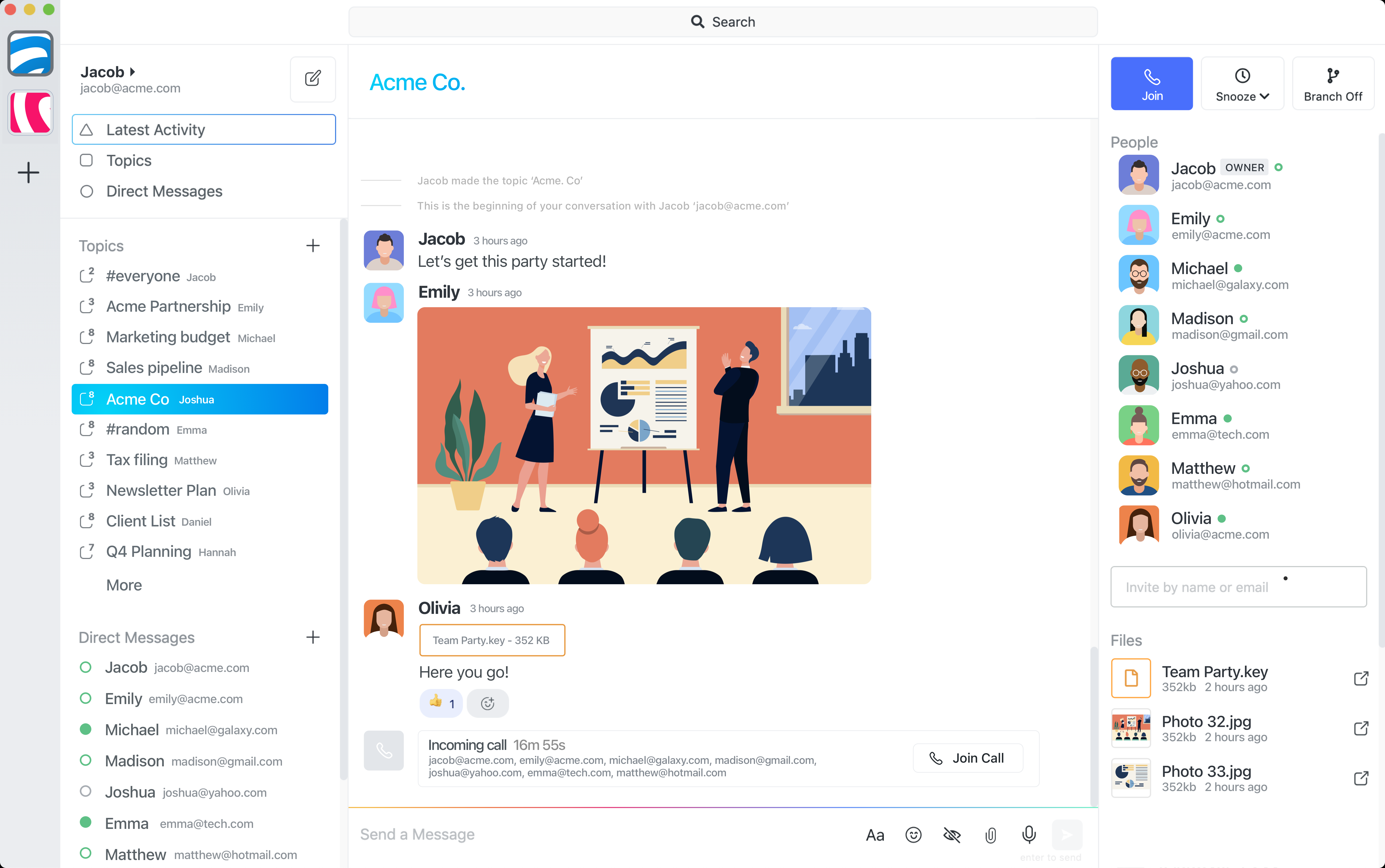
Summary: when to choose Speakeasy vs Discord
Choose Speakeasy when the priority is focused work conversation: small topic spaces, clear context, private discussions, and less notification noise. Choose Discord when the priority is a community server, informal group presence, voice-heavy hangouts, or a public always-on space.
Work topics vs community servers
Discord starts with servers and channels that work well for communities, fan groups, and broad social spaces. Speakeasy starts with topics: focused rooms for one project, client, decision, task, or workflow so the conversation stays close to the work.
Focused team conversations
Work chat often needs a clear owner, a specific audience, files, quick calls, and follow-up that can be found later. Speakeasy keeps those pieces together in a topic instead of spreading them across server channels, side threads, and fast-moving chat history.
Threads vs topics
Discord threads can split off fast-moving side discussions in a busy server, but work gets harder to track when key context, files, and follow-ups live inside a thread tied to an old message. Speakeasy topics make each work conversation a first-class place that is easier to find, share, and finish.
Less noise and fewer distractions
Discord is designed to keep groups active and present, which can be useful for communities but noisy for focused work. Speakeasy keeps the surface calmer by scoping each topic to the people and context needed for that conversation.
Professional work context
Teams often need work chat to feel separate from community activity, gaming spaces, or social servers. Speakeasy gives work its own professional context, making it easier for teammates and external collaborators to understand what a conversation is for.
Private topic-based discussions
A Speakeasy topic can stay intentionally small for a client issue, partner conversation, leadership decision, or project follow-up. That keeps sensitive or narrow work out of broad channels without forcing the team to create another server structure.
When Discord is still the better choice
Discord remains the better choice for large communities, public groups, voice-first social spaces, creator communities, and informal always-on groups where work ownership and structured follow-up are less important than energy, presence, and scale.
Common questions
Is Speakeasy a replacement for Discord?
Speakeasy can replace Discord for focused work chat when the job is structured team conversation, private topics, files, quick calls, and follow-up. Discord is still a better fit for communities, public groups, and always-on social spaces.
When is Speakeasy better than Discord for work?
Speakeasy is a better fit when a team wants each project, client, decision, or workflow to have a clear topic with the right people involved, instead of managing work inside a busy community server.
Can Speakeasy support private topic-based discussions?
Yes. Speakeasy topics can stay intentionally small and private, so teammates, clients, contractors, or partners can discuss work without pulling a whole server or large group into the conversation.
When should a team still choose Discord?
Discord is stronger for large communities, voice-first hangouts, public groups, game communities, and informal always-on spaces where social presence matters more than structured work follow-up.